Work
Proof that the research can carry into real decisions.
Selected work showing two different kinds of depth: an active options-education client engagement and an anonymized multi-phase market, product and competitive intelligence project.
ANONYMIZED CLIENT WORKCompetitive researchMarket and competitor analysis structured for strategic decisions. Strategy architectureExecutive-ready research and recommendations, not isolated content tasks. Content systemOrganic social and educational content designed around the platform’s audience and offer. Media prototypesProduction-ready educational video concepts and branded lesson formats.
OPTIONS EDUCATION CLIENT
ACTIVE CLIENT ENGAGEMENTEvidence Axis supported an options-education platform across a multi-phase research and strategy engagement, then carried the work forward into content architecture and educational media production.
The public case summary is intentionally bounded. It demonstrates the type of work delivered without publishing private client material.

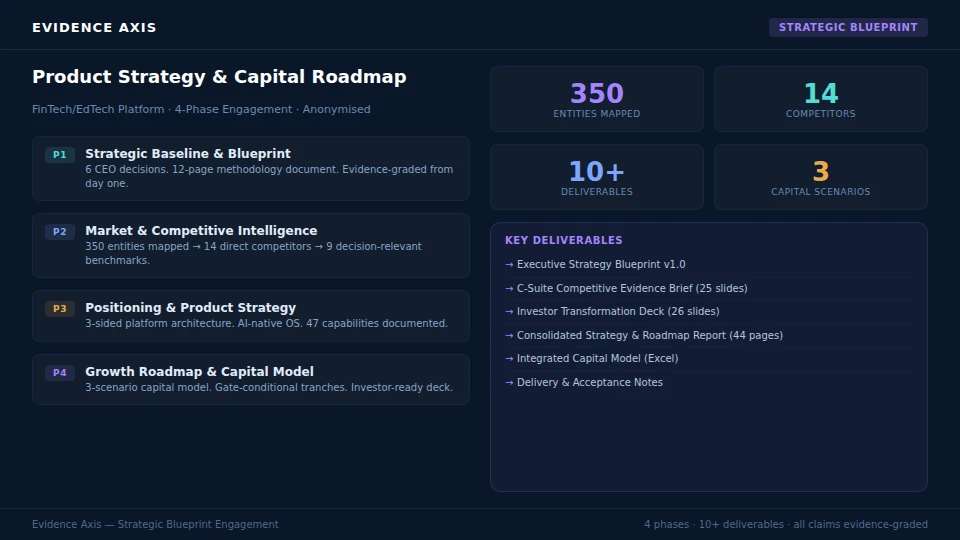
- 350Market entities mapped
- 14Direct competitors identified
- 9Decision benchmarks scored
- 8Capability domains assessed
- 47Product capabilities designed
- 3Capital scenarios modelled
ANONYMIZED DEEP-DIVE CASE
A FinTech / EdTech platform for retail options traders.
The client needed a competitive view strong enough to inform product design, positioning and an investor-facing roadmap — not a list of competitors copied from search results.
The work moved from broad market mapping into direct-competitor validation, decision benchmarks, product implications, AI workflows and capital priorities.
RESEARCH DISCIPLINE
Architecture before analysis — without turning process into the product.
DISCOVER
Map broadly enough to avoid anchoring on the obvious names.
VERIFY
Separate public evidence from vendor assertion.
CLASSIFY
Keep fact, inference and unresolved gaps visible.
DECIDE
Carry the evidence forward into product and strategic choices.
What depth looked like in practice.
The value is not the exact package structure. It is the ability to move from a large evidence field to a decision-ready competitive view.
01
Research architecture & strategic baseline
The engagement began by defining the founder decisions, research architecture, evidence standard and decision boundaries before the analysis expanded.
- 6 founder decisions documented
- 5-module product audit
- Evidence grading from the first phase
- Baseline deck + research inventory
02
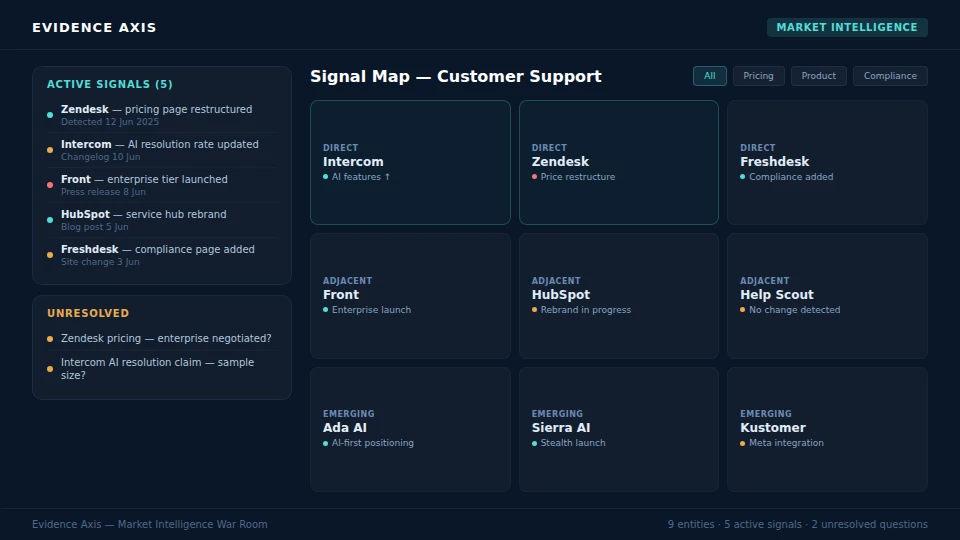
Market & competitive intelligence
A broad market map was narrowed into a decision-relevant competitor set and capability matrix, then used to identify where competitive white space actually existed.
- 350 entities mapped
- 14 direct competitors identified
- 9 decision benchmarks
- 8 capability domains assessed
- 25-slide C-suite competitive deck
03
Product, AI & response architecture
The competitive evidence was carried forward into product architecture, AI workflow design and a conditional capital roadmap rather than being left as a stand-alone report.
- Three product surfaces designed
- AI operating model and supervised workflows
- Conditional product roadmap
- Three capital scenarios
- Investor and executive deliverables
EXAMPLE OF A DECISION-RELEVANT FINDING
“No single competitor leads across education, workflow, lifecycle, and technology.”
The conclusion came from the capability matrix and decision benchmarks developed in the competitive phase. Its value was what happened next: it influenced product priorities and positioning rather than ending as a line in a report.
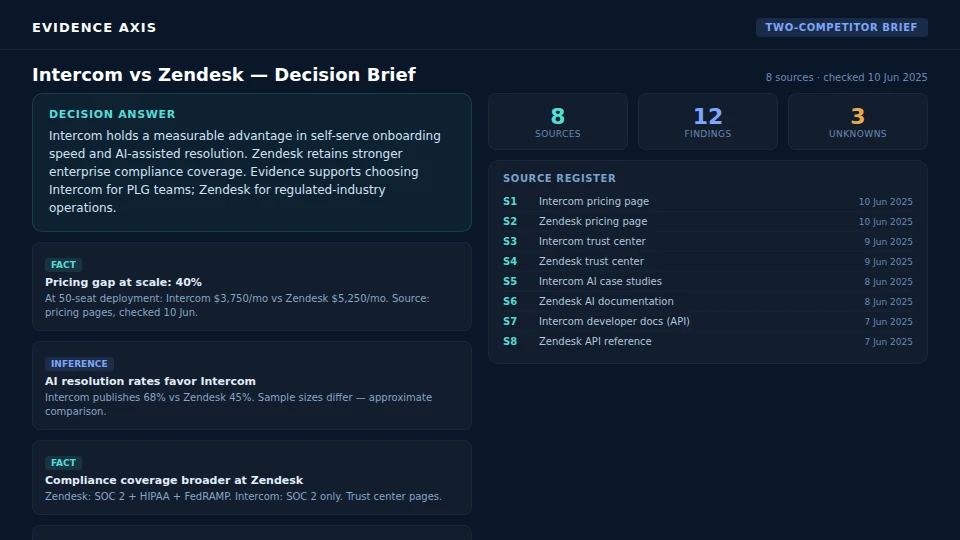
PUBLIC INTELLIGENCE SAMPLE
View Sample Intelligence Brief Inspect the current Evidence Axis brief format.
The public Intercom vs Zendesk demonstration shows the source trail, evidence states and decision structure used in a bounded competitive question.
Start with the work — or the decision
See the work before you start an engagement.
Request a complimentary company-specific intelligence brief, or bring a competitive decision that already needs deeper support.
hello@evidenceaxis.com